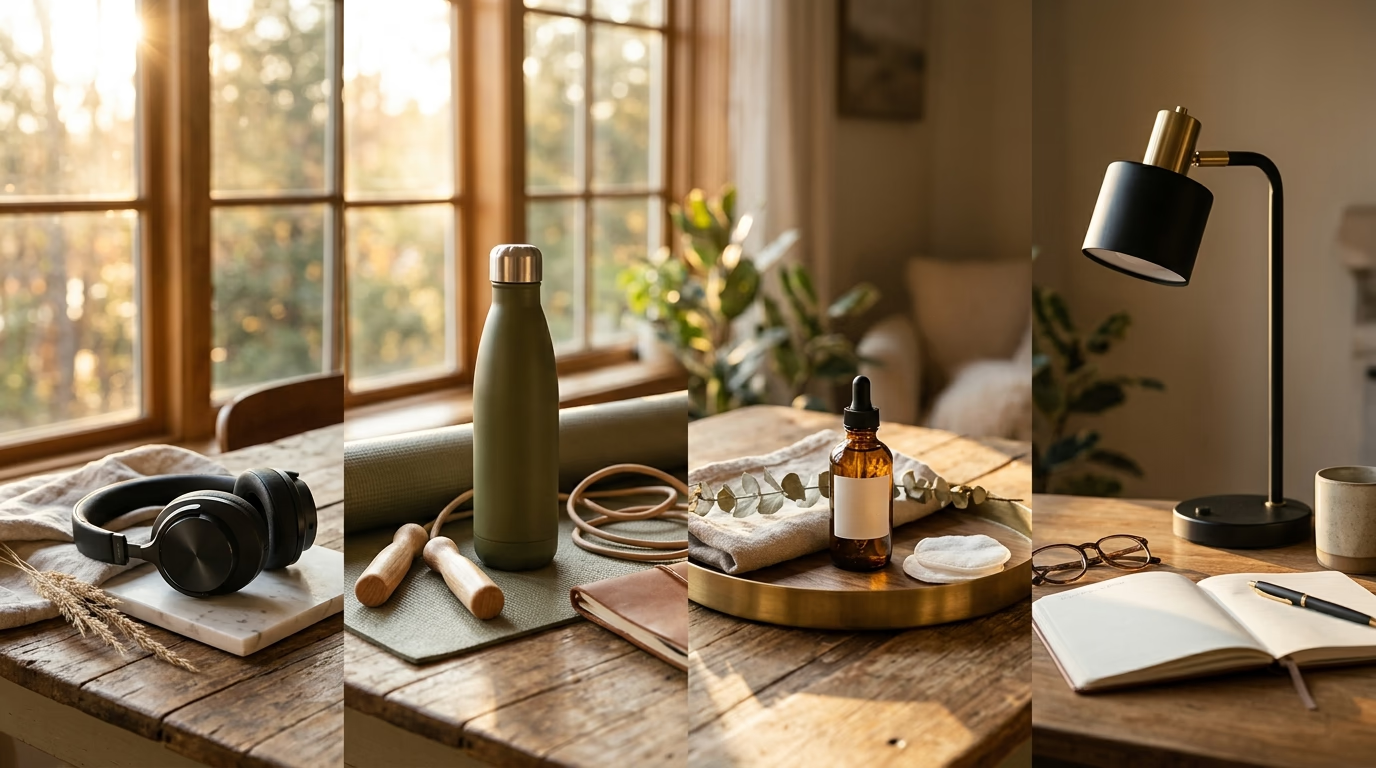

A white-background product image tells shoppers what a product looks like. A strong lifestyle image helps them understand how that product fits into a real situation.
That distinction matters because online shoppers cannot physically pick up an item, compare its dimensions against everyday surroundings, test its ergonomics, or place it inside their living room. Your secondary listing image gallery must perform that cognitive work for them.
Amazon official seller guidance recommends using additional product images to show the product in use, within its natural environment, from multiple angles, and highlighting features that are not visible in the primary white-background MAIN image. Amazon also enforces that secondary imagery must accurately represent the product being sold without misleading scale or omitted components (sellercentral.amazon.com).
Large-scale e-commerce usability testing conducted by Baymard Institute reinforces why visual context directly dictates shopper behavior:
- 56% of users explore product image galleries as their very first action upon landing on a product detail page (baymard.com).
- 42% of users actively attempt to determine physical product dimensions and scale from gallery imagery, frequently abandoning listings when in-scale references are missing (baymard.com).
Neither finding implies that adding an arbitrary lifestyle scene yields an automatic conversion spike. The practical takeaway is direct: product imagery is the primary visual interface shoppers rely on to inspect, evaluate, and trust what they are buying.
A well-engineered lifestyle image answers the core questions a clean product cutout leaves unresolved:
- How large is this product in real life?
- Where does it live in my home or workspace?
- How does a person physically interact with it?
- Does this item fit my routine and lifestyle aesthetic?
Mastering amazon lifestyle product image best practices transforms casual listing browsers into confident buyers by removing spatial uncertainty.
What Are Amazon Lifestyle Product Images?
Direct Definition: An Amazon lifestyle product image positions an item within a realistic environment, daily use case, or active human interaction rather than isolated on an empty white backdrop, allowing prospective buyers to evaluate real-world scale, function, and ownership context.
Common examples across commercial categories include:
- A cold-brew coffee maker placed on a natural quartz kitchen countertop beside a filled glass.
- An ergonomic hiking daypack worn on a woodland trail, establishing strap fit and load distribution.
- A minimalist architectural desk lamp illuminating a laptop, notebook, and keyboard setup.
- A modular sectional sofa arranged inside a furnished living room, establishing walking clearance.
- A cordless power tool actively driving a fastener into a wooden workpiece.
- A hyaluronic acid facial serum depicted during actual skincare application.
- A portable Bluetooth speaker positioned on an outdoor wooden picnic table.
In each scenario, the environment is never the primary hero. The product remains the undisputed focal point, while the surroundings supply critical contextual clues.
Amazon's official photography guidelines categorize lifestyle images as visuals that show items in action, emphasizing that intentional styling communicates brand credibility and product utility (sell.amazon.com). Amazon distinguishes lifestyle shots from pure scale diagrams and macro detail shots because each answers a distinct buyer question:
- Studio Product Photography: Answers "What is the physical product and what does it look like?"
- Amazon Lifestyle Photography: Investing in deliberate amazon product lifestyle photography answers "How does this product perform in an authentic human environment?"
Top-performing Amazon listing systems deploy both formats in a calculated, deliberate sequence.
Why Lifestyle Images Matter on Amazon
Core Principle: Lifestyle imagery bridges the online sensory gap. By illustrating proportional scale, real-world utility, and environmental harmony, contextual images resolve buyer skepticism that technical specification charts cannot overcome.
1. Closing the Online Physicality Deficit
When shopping in a brick-and-mortar retail store, consumers gather instant physical information. They lift the item to test its weight, run their fingers across the material texture, evaluate button click feedback, and contrast its size against nearby displays.
Online, this entire evaluation pipeline transfers to digital imagery. Baymard Institute observed that when shoppers cannot deduce reliable scale from listing images, they frequently misjudge dimensions, assume the item will not fit their space, and bounce to a competitor (baymard.com).
A contextual lifestyle image provides an immediate spatial anchor. Placing a storage bin underneath a standard 30-inch work desk communicates practical volume far more effectively than reading "14.2 x 10.5 x 8.8 inches" in an attribute bullet point.
2. Helping Shoppers Mentally Picture Ownership
Consider two listings selling the exact same modern task lamp:
- Listing A: Displays five studio cutout angles against pure white and gray backgrounds.
- Listing B: Shows the lamp illuminating a clean home-office desk beside a 27-inch monitor, notebook, and ceramic mug, with warm ambient light cast across the work surface.
Listing A answers what the lamp looks like in a warehouse. Listing B answers what the lamp will look like in the buyer's home tonight.
This is not emotional fluff. Contextual visualization gives the brain an immediate blueprint of ownership, drastically reducing purchase hesitation.
7 Principles of Strong Amazon Lifestyle Product Images
Building high-converting lifestyle imagery requires balancing visual aesthetics with rigorous commercial clarity. Apply these seven foundational principles to every secondary image you produce.
                    ┌─────────────────────────────────────────┐
                    │     7 CORE LIFESTYLE DESIGN RULES       │
                    └─────────────────────────────────────────┘
                                         │
         ┌───────────────────────────────┼───────────────────────────────┐
         │                               │                               │
         ▼                               ▼                               ▼
  1. Product as Hero            2. Native Environment           3. True-to-Life Scale
  (60-70% frame dominance)      (Believable, functional)        (Everyday comparative cues)
         │                               │                               │
         ├───────────────────────────────┼───────────────────────────────┤
         │                               │                               │
         ▼                               ▼                               ▼
  4. Active Demonstration       5. Purposeful Props             6. Mobile-First Cropping
  (Show the verb in action)     (Zero decorative clutter)       (Legible at 350px width)
                                         │
                                         ▼
                                7. System Consistency
                                (Cohesive color & tone)
1. Keep the Product as the Undisputed Hero
The environment must frame the product, never bury it. Amazon's product photography guidance specifically cautions sellers against allowing secondary props, models, or elaborate background architecture to draw attention away from the purchased item (sell.amazon.com).
A frequent design mistake is creating an architectural interior or expansive outdoor scenery where the actual product occupies less than 15% of the frame. While that composition might work in a luxury print magazine spread, it fails on an Amazon listing carousel where users scan quickly on small screens.
The 350-Pixel Thumbnail Test: Downscale your lifestyle image to a 350-pixel square on your monitor. If you cannot pinpoint the product within 400 milliseconds, your background contrast is too weak or your props are competing for visual dominance.
2. Ground the Product in Its Native, Believable Environment
Every setting must match the primary use case of the intended customer.
- High-end espresso machines belong on functional kitchen surfaces, not boardroom conference tables.
- Heavy-duty utility wagons belong at sporting fields or beach entries, not pristine studio stages.
- Noise-canceling headphones belong on busy morning transit trains or open-plan co-working desks.
Prioritize believable utility over showroom perfection. An espresso machine photographed on an authentic, well-organized home counter with realistic morning light often generates higher buyer trust than a sterile million-dollar architectural stage that feels detached from everyday life.
3. Use Contextual References to Accurately Communicate Scale
Dimensional charts provide mathematical data; contextual images provide spatial intuition. Establishing accurate product scale and context amazon images eliminates customer sizing confusion and prevents costly product returns.
Baymard's usability research revealed that 42% of test subjects attempted to calculate real-world volume by scanning nearby items in lifestyle photos (baymard.com). Reliable real-world anchors include:
- An adult hand holding or operating the item.
- Standardized furniture (countertops at 36-inch standard height, dining tables at 30 inches).
- Universally recognized hardware (laptops, smartphones, standard mugs, notebooks).
- Side-by-side positioning showing the item inside its dedicated compartment (e.g., a travel umbrella tucked inside an outer backpack pocket).
Compliance Rule: Never manipulate camera focal length, wide-angle lens distortion, or digital compositing to exaggerate product dimensions. Amazon policy strictly mandates that product imagery accurately depict the scale and specifications of the delivered item (sellercentral.amazon.com). Misrepresenting volume leads to high return rates and negative customer reviews.
4. Demonstrate the Product in Active Use
Static lifestyle arrangements show where a product sits. Active demonstration images show how the product works.
Compare these two execution models:
- Decorative Setup: A model stands beside a blender on a marble counter, looking directly at the camera with hands resting flat.
- Demonstration Setup: The model's hand rotates the blender's variable speed dial while freshly blended smoothie pours into a portable travel cup, clearly illustrating lid seal, pouring lip ergonomics, and motor operation.
The second execution communicates function, ergonomics, and capacity in a single visual pass. Amazon explicitly highlights shots showing products in action as ideal supplementary imagery (sellercentral.amazon.com).
5. Use Functional Props and Eliminate Decorative Clutter
Every prop included in your scene must perform at least one of these four mechanical jobs:
- Establish physical scale against a recognized object.
- Demonstrate how the product operates.
- Establish the authentic operating environment.
- Reinforce an immediate functional benefit.
Consider an ergonomic desk organizer:
- Essential Props: A 15-inch laptop, a mechanical keyboard, two pens, and a smartphone. These demonstrate compartment fit and cable routing.
- Clutter Props: Succulent plants, decorative stone sculptures, scented candles, and vintage cameras. These crowd the frame, confuse scale, and dilute attention.
If removing a prop does not strip critical buying information from the shopper, delete it from the frame.
6. Engineer for Mobile Screens Before Desktop Displays
Over 70% of Amazon customer traffic originates from mobile devices. An image composition that looks clean on a 27-inch desktop monitor can degrade into illegible visual clutter on a 6-inch phone screen.
Mobile viewing conditions demand:
- Tight Framing: Crop out unnecessary room ceilings, floorboards, and background expanses.
- Strong Luminance Contrast: Maintain clear separation between the product silhouette and the ambient backdrop.
- Single Focal Anchor: Keep the primary human interaction centered or weighted along strong grid thirds.
- High-Legibility Callouts: Restrict text overlays to 3 to 4 words rendered at minimum 14pt relative scale.
Review our dedicated Amazon mobile image optimization guide for detailed technical specifications on mobile viewports and compression ratios.
7. Maintain Systemic Visual Consistency Across the Gallery
A lifestyle image should feel like a natural chapter in a cohesive visual book, not an unrelated stock photo pasted into the listing.
Ensure continuity across these creative variables:
- Color Palette & Grading: Match the white balance, color temperature, and shadow depth of your lifestyle shots to your infographic slides.
- Typography: If your lifestyle image includes a benefit label, use the identical typeface, weight, and tracking found across your listing's secondary images.
- Model Styling: Keep model wardrobe, grooming, and aesthetic tone consistent across all human-centric slides.
Consult our framework on Amazon product image color psychology and composition to align environmental color temperatures with product finishes.
Lifestyle Images vs Infographic Images Amazon: Strategic Differences
Core Distinction: Understanding the practical boundary between lifestyle images vs infographic images amazon sellers deploy prevents visual cannibalization. Lifestyle images build environmental context and demonstrate physical usage, whereas infographic images explain technical features, dimensional tolerances, and material engineering.
┌──────────────────────────────────────┐  ┌──────────────────────────────────────┐
│       AMAZON LIFESTYLE IMAGE         │  │       AMAZON INFOGRAPHIC IMAGE       │
│                                      │  │                                      │
│  • Realistic environment             │  │  • Pure feature callouts             │
│  • Natural contextual lighting       │  │  • Vector icons and pointers         │
│  • Human physical interaction        │  │  • Exploded part diagrams            │
│  • In-scale everyday objects         │  │  • Dimensional metric callouts       │
│  • Answers: "Where does it fit?"     │  │  • Answers: "How is it engineered?"  │
└──────────────────────────────────────┘  └──────────────────────────────────────┘
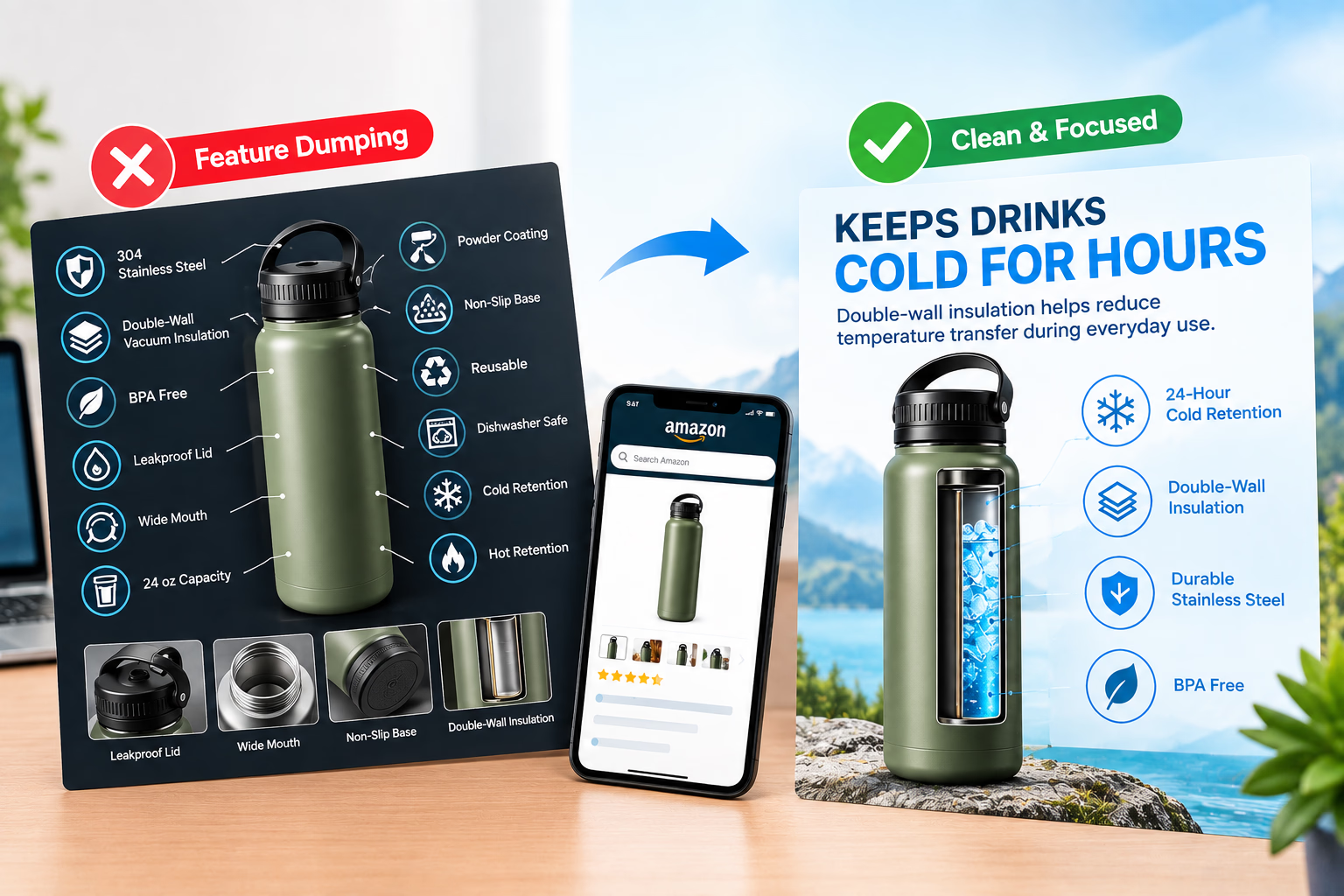
A common failure mode is attempting to force both tasks into a single image: a beautiful lifestyle scene covered in six text boxes, comparison arrows, star rating badges, and dimension lines. This creates cognitive overload. Let your lifestyle image communicate environment and scale, and let dedicated infographics handle technical breakdowns.
The 3-Word Rule for Lifestyle Text Overlays
If a lifestyle visual requires text, limit the overlay to a single concise benefit capsule:
- Right:
FITS UNDER STANDARD DESKS - Right:
ONE-HAND OPEN & LOCK - Wrong:
Our patented dual-hinge design allows smooth single-handed operation while you commute on crowded trains.
Let the camera demonstrate the verb; use text only to label the single feature the lens cannot physically reveal.
Category-by-Category Amazon Lifestyle Image Examples & Playbooks
Examining concrete amazon lifestyle image examples across core consumer categories reveals how high-converting brands structure visual context:
1. Kitchen and Culinary Appliances
- Core Shopper Hesitations: Counter space footprint, ease of daily cleaning, cord management, under-cabinet clearance.
- Winning Scene Blueprint: Place the appliance on a realistic countertop directly beneath standard 18-inch upper kitchen cabinets. Show an active output (fresh coffee pouring, dough being kneaded). Include 1 to 2 familiar items (ceramic mug, standard cutting board) to ground dimensions.
2. Furniture and Home Decor
- Core Shopper Hesitations: Proportion inside average rooms, fabric texture realism, walking clearance, assembly scale.
- Winning Scene Blueprint: Position furniture within a fully furnished, proportional room rather than a cavernous architectural studio. Show a person interacting with the piece naturally (sitting, reaching for a drawer, adjusting height) to establish undeniable human scale.
3. Fitness Equipment and Active Gear
- Core Shopper Hesitations: Floor footprint during workout, storage portability, stability under load, ergonomic grip.
- Winning Scene Blueprint: Capture the product mid-repetition in an authentic home-gym or living area. Avoid hyper-dramatic bodybuilding poses if the target demographic is everyday home fitness enthusiasts; authenticity establishes approachable utility.
4. Outdoor, Travel and Camping Hardware
- Core Shopper Hesitations: Weather resilience, packed volume vs. deployed volume, field durability, carry weight.
- Winning Scene Blueprint: Show the equipment deployed in authentic field conditions (dirt trail, damp campsite, tailgate setup). Pair deployed lifestyle imagery with a compact shot showing how the item packs down inside a trunk or attaches to a pack.
5. Beauty, Cosmetics and Personal Care
- Core Shopper Hesitations: Texture/viscosity, dispenser control, realistic skin finish, travel compliance.
- Winning Scene Blueprint: Focus tightly on the point of physical application (dropper dispensing serum onto skin, cream spreading across cheekbone). The background should remain a clean, soft-focus bathroom vanity or vanity tray.
6. Consumer Electronics and Computer Peripherals
- Core Shopper Hesitations: Port accessibility, cable clutter, desk footprint, compatibility with existing setups.
- Winning Scene Blueprint: Place the device within an authentic, organized workstation. Show real-world cable management and practical clearance alongside standard hardware (laptops, monitors, mice).
3D Lifestyle Renders Amazon: Virtual Staging vs Physical Photography
Core Reality: When planning 3d lifestyle renders amazon sellers often assume CGI simply replaces physical cameras. In reality, 3D CAD rendering provides production flexibility, repeatable lighting, and digital scene manipulation. Choosing between the two requires evaluating physical manufacturing stages, variant complexity, and material textures.
                       ┌─────────────────────────────────┐
                       │     PRODUCTION PATH DECISION    │
                       └─────────────────────────────────┘
                                        │
           ┌────────────────────────────┴────────────────────────────┐
           ▼                                                         ▼
  CHOOSE 3D CAD RENDERING                                   CHOOSE STUDIO PHOTOGRAPHY
  • Large merchandise (sofas, appliances)                   • Complex organic fabrics & apparel
  • Extensive color/finish variants (10+ SKUs)              • Gourmet food, beverages & liquids
  • Pre-launch marketing before production                  • Skincare application on human skin
  • Impossible camera cuts & exploded views                 • Intricate natural leather weathering
When to Choose 3D Lifestyle Renders
- Bulky, Heavy Merchandise: Transporting, unboxing, and staging heavy fitness racks or sectional sofas in physical rental locations incurs massive freight and studio overhead. 3D virtual staging creates flawless environments with zero logistical friction.
- Deep Color Catalogs: Once a 3D master CAD model is textured, creating 12 distinct color variants in identical environmental lighting takes minutes, ensuring total gallery continuity.
- Pre-Launch Speed: Brands can engineer complete Amazon listing image stacks weeks before mass production shipments arrive at port.
When Traditional Photography Wins
- Intricate Organic Textures: Linen, raw denim, sheer cosmetics, and food preparation exhibit microscopic light scattering and physical imperfections that can appear synthetic if not rendered by top-tier CGI artists.
- Complex Human Tactile Interaction: Fingers pressing into soft memory foam or hands lathering soap are faster and more convincing to capture with a camera than constructing complex digital soft-body physics.
For brands balancing scale and cost, a hybrid workflow is the gold standard: capture the physical product with real studio photography, extract the clean asset, and composite it into an accurately scaled, photoreal 3D virtual environment.
Amazon Compliance: AI-Generated Models & Synthetic People
If your lifestyle imagery incorporates photorealistic AI-generated human models, you must comply with Amazon's current metadata disclosure standards.
Amazon XMP Policy Mandate: Amazon requires sellers to tag product images and A+ Content containing photorealistic AI-generated human performers with the dedicated metadata keyword:
contains-synthetic-performerAccording to official Amazon Seller Central documentation, this keyword must be embedded into the 13px] font-mono border border-zinc-200">dc:subject XMP metadata field of the image file prior to uploading ([sellercentral.amazon.com):
- Applies To: Photorealistic AI-generated human faces, bodies, and performers.
- Does Not Apply To: Real photographed human models, fully virtual environments without people, or illustrated non-photorealistic characters.
Ensure your creative agency or design team embeds this metadata during Photoshop or Lightroom exports to maintain full catalog compliance.
Integrating Lifestyle Images into the 7-Slot Listing Stack
A high-converting listing carousel functions as a structured visual argument. Each image slot addresses a specific milestone in the customer's decision journey.
┌───────────┐ ┌───────────┐ ┌───────────┐ ┌───────────┐ ┌───────────┐ ┌───────────┐ ┌───────────┐
│  SLOT 1   │ │  SLOT 2   │ │  SLOT 3   │ │  SLOT 4   │ │  SLOT 5   │ │  SLOT 6   │ │  SLOT 7   │
│   MAIN    │ │  PRIMARY  │ │ TECHNICAL │ │ LIFESTYLE │ │ LIFESTYLE │ │ PROOF &   │ │ DIMENSION │
│   HERO    │ │  BENEFIT  │ │ FEATURES  │ │ CONTEXT   │ │ IN-USE    │ │ OBJECTION │ │ & SPECS   │
└───────────┘ └───────────┘ └───────────┘ └───────────┘ └───────────┘ └───────────┘ └───────────┘Positioning your primary lifestyle image in Slot 4 allows the customer to understand the core mechanical features (Slots 2 to 3) before validating how those features translate into daily life.
Review our comprehensive operational blueprint on the best order for Amazon listing images to align your image sequence with category-specific consumer intent.
Pre-Upload Amazon Lifestyle Image Checklist
Execute this quality assurance audit before publishing any lifestyle creative to Seller Central:
1. Product Fidelity & Policy Verification
- ☑ Is the exact SKU version, color, and hardware revision displayed?
- ☑ Are product proportions 100% accurate against factory engineering specs?
- ☑ Are all included accessories clearly distinguished from non-included decorative props?
- ☑ Does the image comply with Amazon general image standards (minimum 1600px on the longest side for zoom activation)?
- ☑ If using photorealistic AI models, is
contains-synthetic-performerembedded in the XMP metadata?
2. Environmental & Spatial Context
- ☑ Does the setting represent a genuine, authentic use case for your target customer?
- ☑ Does the scene contain at least one familiar, standardized object to establish intuitive scale?
- ☑ Are all props strictly functional, eliminating distracting visual clutter?
- ☑ Does the lighting direction on the product match the ambient lighting of the background environment?
3. Composition & Mobile Readability
- ☑ Does the product occupy at least 60% to 70% of the active visual frame?
- ☑ Does the product pass the 350-pixel thumbnail visibility test?
- ☑ Is there distinct luminance contrast between the product silhouette and the backdrop?
- ☑ Are text overlays limited to 4 words or fewer, rendered in high-contrast legible typography?
Frequently Asked Questions (FAQ)
What are Amazon lifestyle product images?
Amazon lifestyle product images show a product being used, worn, or displayed within a realistic real-world environment rather than isolated against a plain white background. Amazon recommends secondary lifestyle imagery to help shoppers understand product dimensions, practical utility, and environmental placement.
How do lifestyle images boost Amazon conversion rates?
Lifestyle imagery lifts conversion rates by eliminating spatial uncertainty and answering practical buyer questions. Usability studies from Baymard Institute reveal that 42% of online shoppers attempt to evaluate product size from gallery images; contextual lifestyle imagery provides immediate visual scale references, reducing purchase hesitation and product return rates.
Can I use 3D renders for Amazon lifestyle images?
Yes, photorealistic 3D CAD renders are widely used for Amazon lifestyle imagery. 3D virtual staging allows brands to place products in hyper-realistic digital kitchens, living rooms, and outdoor environments with total control over lighting, camera angles, and color variants without the logistical expense of physical location shoots.
How many lifestyle images should an Amazon listing have?
Most high-performing Amazon listings feature two dedicated lifestyle images within their 7-slot gallery: one contextual environmental shot showing scale (typically in Slot 4) and one active demonstration shot showing human physical interaction (in Slot 5).
Should Amazon lifestyle images contain text callouts?
Lifestyle images can feature text, but copy should be restricted to minimal benefit callouts (3 to 4 words maximum), such as "FITS STANDARD CUP HOLDERS" or "ONE-TOUCH OPERATION." Dense paragraphs and technical feature lists belong on dedicated infographic slides, not lifestyle scenes.
Should the product always be centered in an Amazon lifestyle image?
No. Positioning the product along the rule-of-thirds grid lines often creates a more natural, engaging composition. What matters is that the product maintains strong contrast against the background and remains the undisputed visual anchor of the frame.
Are lifestyle images better than infographic images on Amazon?
Neither image type is universally superior; they solve complementary consumer challenges. Lifestyle images build environmental context and demonstrate physical scale, while infographics clarify technical engineering, dimensions, and material specifications. A top-tier Amazon gallery deploys both.
Do 3D lifestyle renders convert better than real photography?
3D renders do not automatically convert better than photography. Conversion depends on image clarity, scale accuracy, and relevance to customer needs. 3D excels at clean lighting, complex angles, and large merchandise, while photography excels at capturing nuanced natural fabrics, food textures, and real human skin application.
Final Strategic Takeaway
A white-background studio shot answers what a product looks like in isolation. A strategic lifestyle image proves what ownership feels like in real life.
The most effective Amazon lifestyle imagery is not merely an attractive photograph. It is a visual explanation:
- It anchors the product in a believable environment.
- It communicates undeniable physical scale.
- It demonstrates actual human operation.
- It stays legible on small smartphone viewports.
- It complies strictly with Amazon image standards.
When you engineer your listing gallery as a structured communication system, lifestyle imagery transitions from passive decoration into an active conversion engine.
Explore our comprehensive Amazon lifestyle photography and listing architecture services to build high-converting, retail-ready image systems for your brand.
Want to audit your Amazon lifestyle photography, scale accuracy, and gallery sequencing? Book a free 30-minute creative growth session with our Amazon listing team.
📅 BOOK A FREE 1-ON-1 STRATEGY MEETING