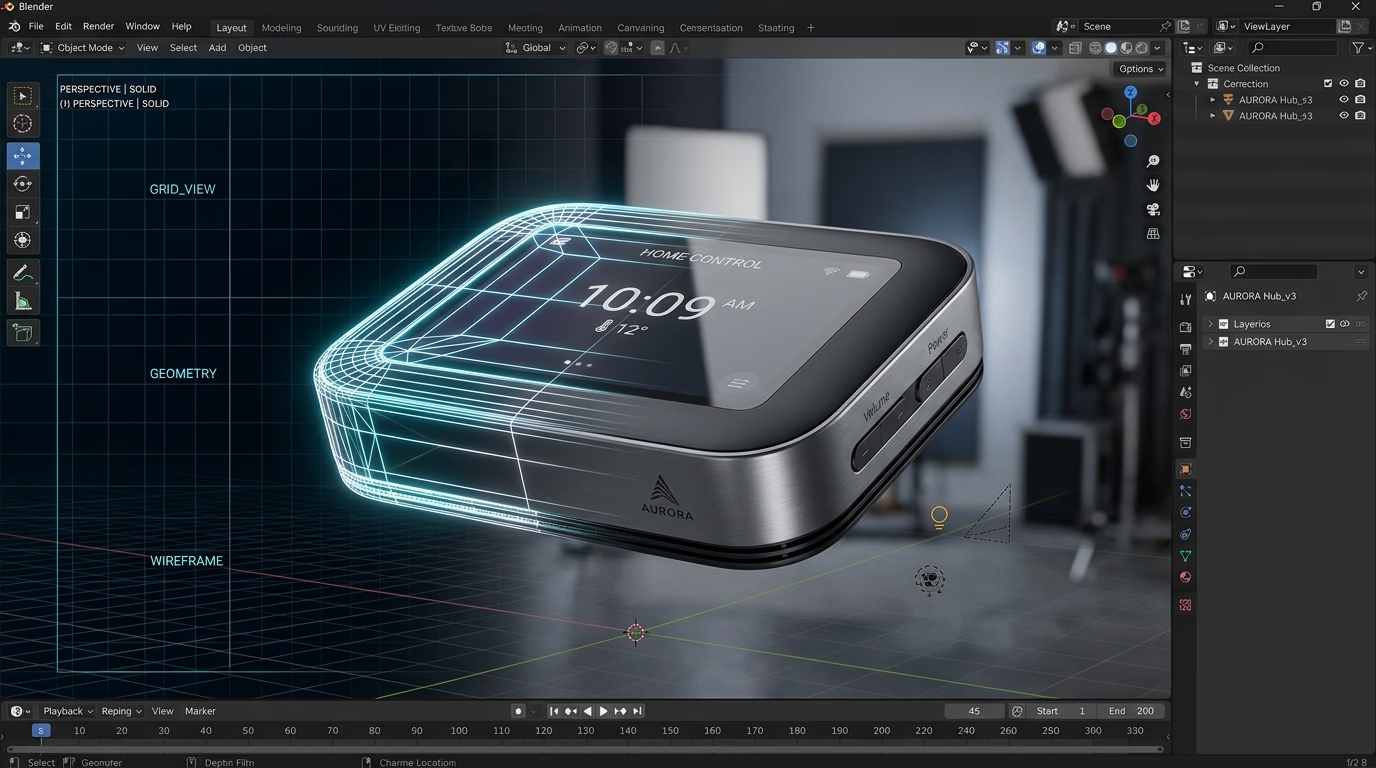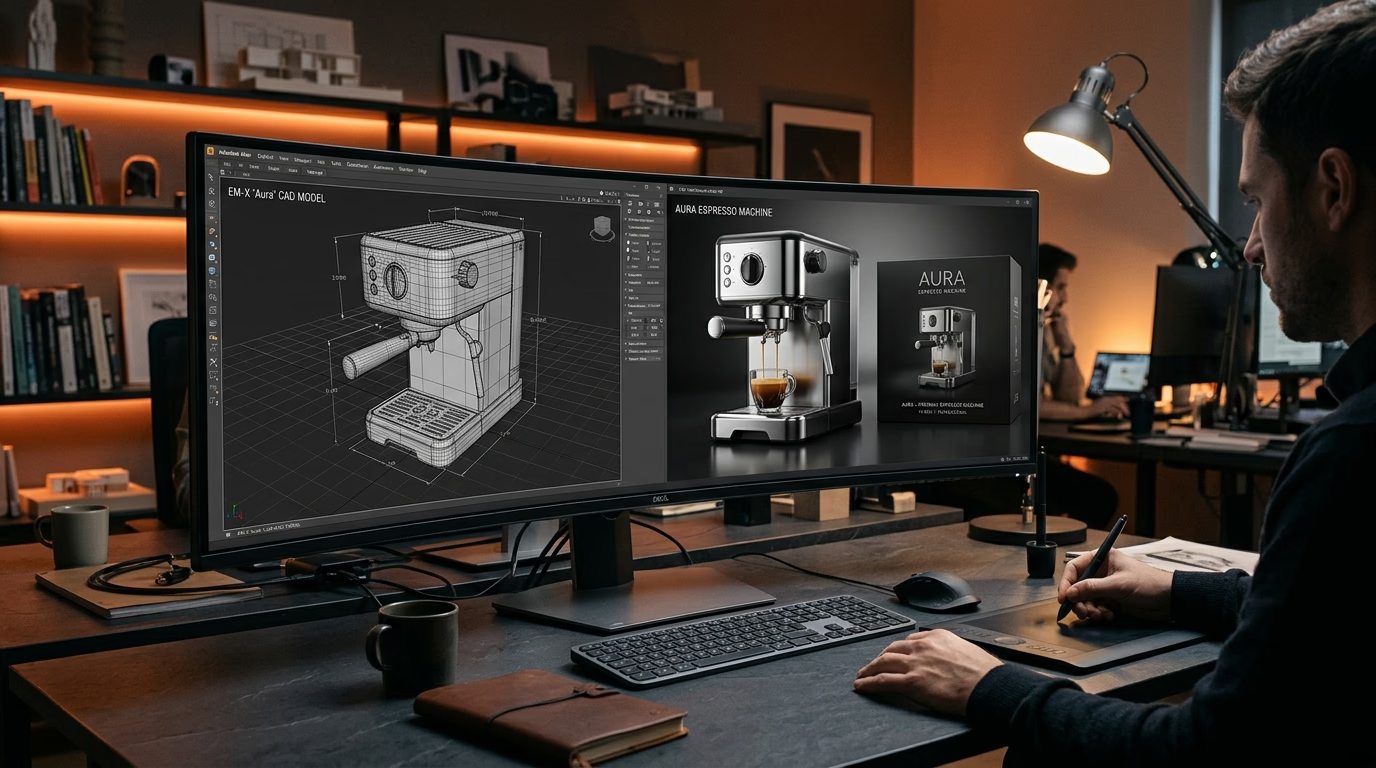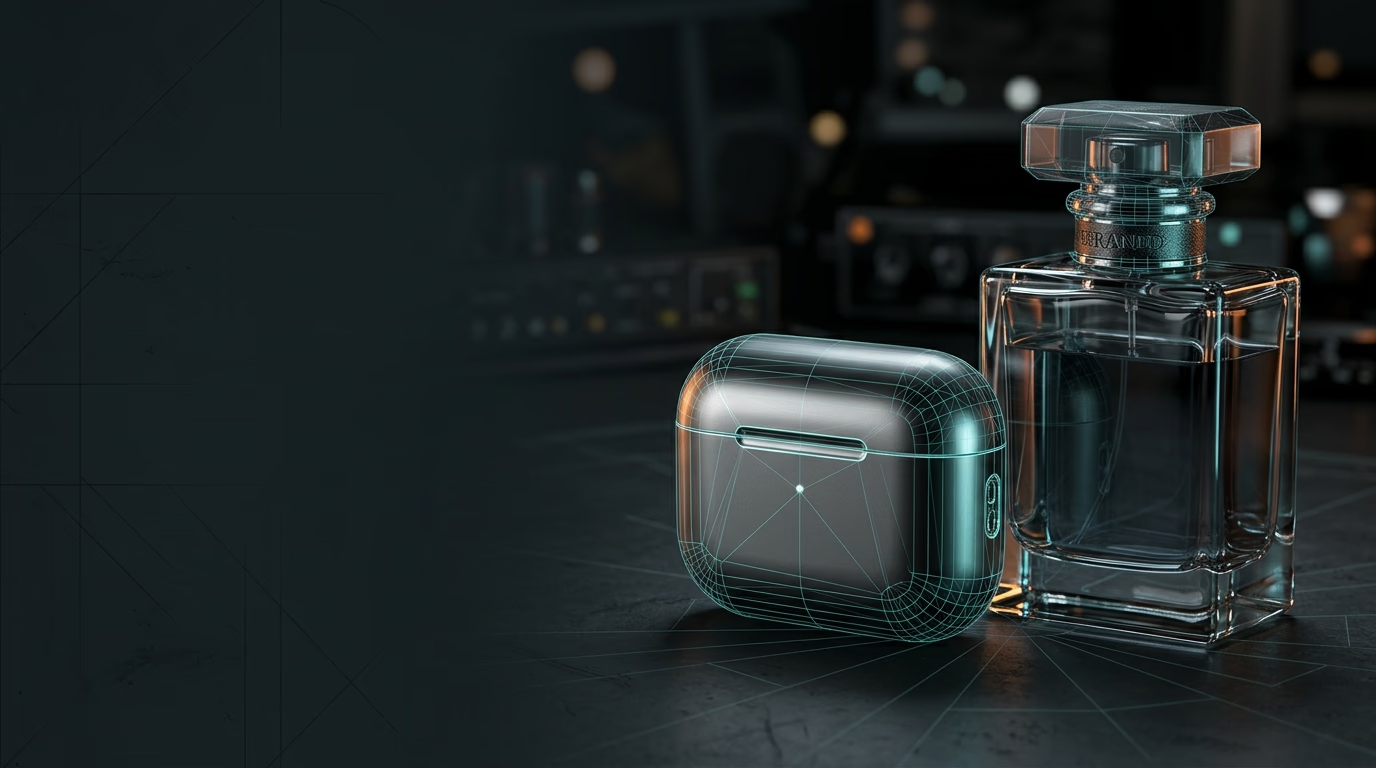

The 3D product rendering cost for an Amazon listing depends on your product's geometry, the availability of manufacturer CAD files, and whether you need standalone white-background renders or fully composited lifestyle scenes. Published 2026 rates from specialized e-commerce 3D studios place a complete seven-image Amazon listing package between $650 and $1,500, with standalone CAD-based image sets starting around $550.
These figures represent published asking rates from active commercial 3D studios, not fixed quotes from Grow Orbit. Because deliverable scopes, polygon modeling depths, and graphic design inclusions vary widely, comparing providers requires evaluating the exact asset deliverables rather than the headline price alone.
For a standard supplement bottle or packaged consumer good with existing CAD geometry, a basic rendering package is often sufficient. Complex electronics, multi-component assemblies, liquid refractions, transparent glassware, or custom room-scale 3D lifestyle scenes demand significantly more shader engineering and a higher production budget.
How Much Does 3D Product Rendering Cost?
The following figures reflect public provider pricing schedules verified in late 2026. Use them as reliable industry benchmarks for budgeting your visual asset production:
The distinction between fixed-scope package prices and per-image rates is the single biggest source of billing confusion for Amazon sellers. A full listing package typically includes geometry cleanup, camera angle staging, seven finished renders, infographic typography, and dimension callouts. Conversely, an attractive "$60 per image" freelance quote often assumes a finished 3D CAD model already exists and bills extra for texture mapping, lighting setup, and text callouts.
A quote for a single rendered angle from an existing digital model is not comparable to an end-to-end package that includes model construction, conversion copy layout, and lifestyle compositing.
What Affects 3D Product Rendering Pricing?
1. Product Geometry and Digital Model Creation
A cylindrical supplement bottle, cosmetics jar, or rectangular cardboard carton requires minimal modeling time. In contrast, an ergonomic mechanical tool, consumer electronic device with ports, vents, and buttons, or textured sports equipment requires complex polygon modeling.
If your manufacturer provides a clean industrial CAD file (.STEP, .IGES, or .OBJ), the 3D artist can skip manual reconstruction. However, CAD files rarely render straight out of the box—they almost always require polygonal retopology, seam smoothing, and surface separation before shaders can be applied.
Without a CAD file, the artist must reconstruct the product from scratch using physical reference photographs, caliper measurements, and manufacturer technical blueprints. This manual reconstruction adds $200 to $900 to your upfront project setup fee.
2. Materials, Textures, and Surface Physics
The physics of how light interacts with your product's surface directly dictates rendering labor. Matte plastics, unvarnished wood, and satin cardboard packaging are straightforward to simulate in virtual ray-tracing engines like Blender, Cinema 4D, or KeyShot.
Conversely, transparent glass bottles with liquid contents, glossy piano-black electronics, chrome coatings, brushed aluminum, and multi-layered translucent cosmetics require intricate refraction nodes and customized HDRI lighting environments. Ensuring physical accuracy prevents customer dissatisfaction: an over-rendered, hyper-glossy digital preview that looks artificial will harm listing credibility and increase return rates.
3. Scene Complexity: Studio White vs. Custom 3D Environments
A pure white background render (RGB 255, 255, 255) requires only virtual light diffusers and the isolated 3D model.
A contextual lifestyle render—such as a blender resting on a marble kitchen countertop surrounded by fruit, ambient morning sunlight, and realistic cast shadows—requires either building a fully textured 3D room or compositing the 3D render seamlessly into a high-resolution 2D backplate. Custom-modeled 3D environments cost $150 to $400 more per image than white-background studio shots.
4. Graphic Design and Infographic Integration
An Amazon listing gallery is an educational conversion funnel, not a collection of plain product snapshots. A high-converting listing requires:
- Feature callout annotations with clean typography.
- Visual scale comparisons and dimension graphics.
- Ingredient or internal engineering cutaway diagrams.
- Trust badges and technical specification matrices.
When reviewing quotes, verify whether the agency delivers fully flattened, upload-ready graphic assets or merely the raw transparent PNG renders. If you must hire a separate graphic designer to lay out copy and iconography, add $35 to $75 per image to your total budget.
5. Color Variations and Packaging Updates
One of the primary financial advantages of 3D rendering over physical studio photography is the marginal cost of variations.
Once your master 3D model is approved, producing six new flavor labels or colorways requires swapping the vector label art and re-rendering the camera views. A physical photoshoot would require shipping new inventory, resetting studio lighting, and paying the day rate again. With 3D modeling, color variants typically cost only $35 to $75 per image.
Common 3D Rendering Pricing Models
For retainers, clarify the rollover terms for unused asset allocations, whether priority rush turnarounds are included, and explicitly confirm that your brand retains 100% intellectual property ownership of the raw 3D mesh files (.C4D, .BLEND, .FBX).
Freelancer vs. Amazon-Specialized Agency vs. High-End Studio
Freelancers (Marketplaces: Upwork, Fiverr Pro)
- Cost: $50 to $500 per image.
- Pros: Cost-effective for simple packaging mockups when you already have clean CAD files and a precise creative brief.
- Cons: Variable ray-tracing realism, frequent communication delays, and limited understanding of Amazon mobile viewport guidelines or category compliance.
Amazon-Focused Growth Agencies (e.g., Grow Orbit)
- Cost: $650 to $1,400 for a coordinated 7-image listing conversion engine.
- Pros: The creative team designs specifically for Amazon search grids, mobile thumb-scroll habits, and category-level A/B test data. Graphic design, conversion copy, and Amazon TOS compliance checks are integrated into the package.
- Cons: Higher initial investment than a single offshore freelancer.
Commercial CGI Studios
- Cost: $2,500 to $10,000+ per project ($500–$1,500 per frame).
- Pros: Hollywood-grade photorealism, custom fluid dynamics simulation, and cinematic camera choreography.
- Cons: Excessive for Amazon marketplace listings; costs rarely yield a proportionate lift in listing conversion rate over an optimized e-commerce agency package.
How to Budget for an Amazon 7-Image 3D Listing Package
To maximize conversion rates, your 7 image slots should systematically eliminate buyer objections rather than duplicating the same angle:
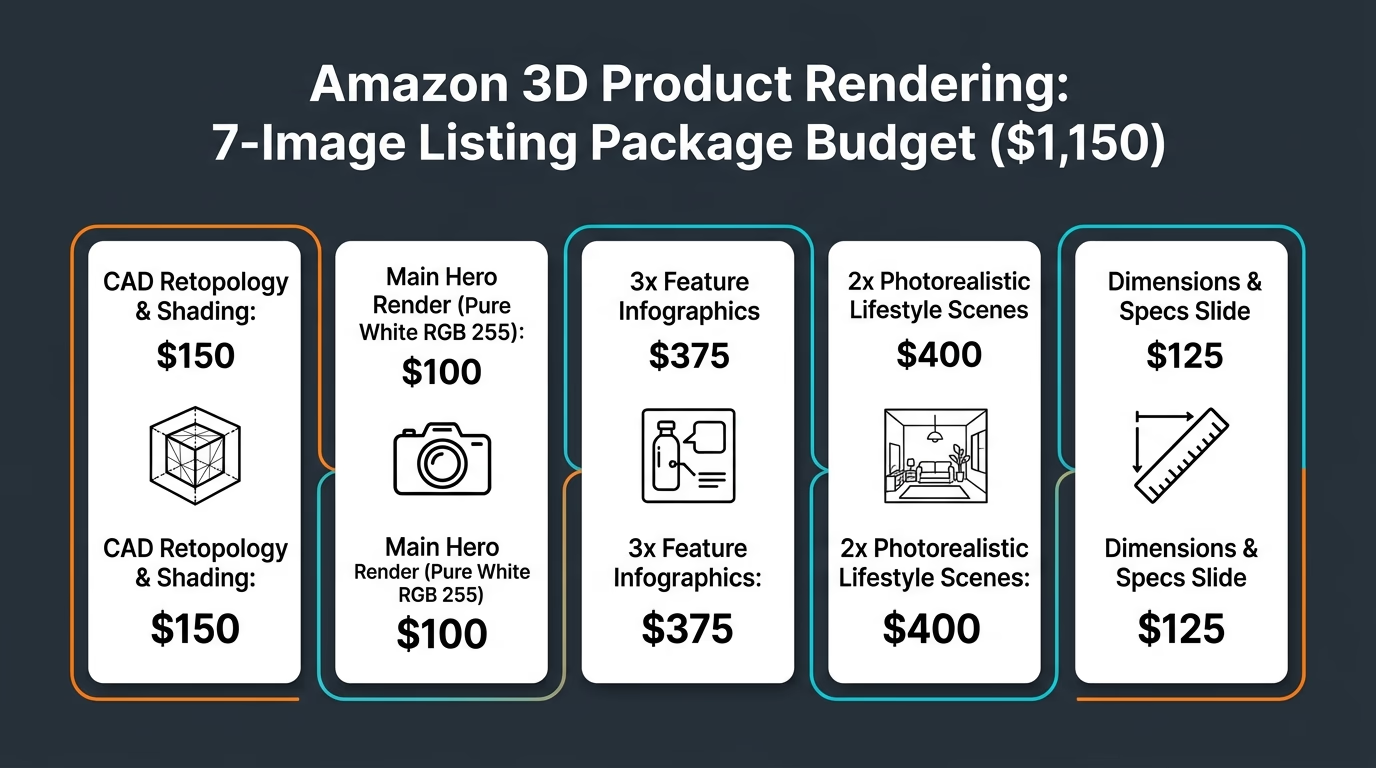
Illustrative $1,150 Production Budget Breakdown
For a brand launching a physical consumer product with manufacturer engineering drawings:
- Initial CAD Retopology & Shader Setup: $150
- Main Hero Render (Pure White Background): $100
- 3 Infographic Feature Layouts ($125 each): $375
- 2 Photorealistic In-Context Lifestyle Scenes ($200 each): $400
- Dimensions & Packaging Specification Slide: $125
- Total Project Budget: $1,150
In Grow Orbit's agency management of consumer brands—such as our work with Kazvoo Consumer Electronics—investing in a unified 3D CAD asset pipeline generated over 1.15M units sold and a +135% MoM growth rate. When the brand added new device colorways, new gallery variations were rendered within 48 hours for a fraction of the cost of physical photography.
3D Rendering vs. Traditional Photography: Financial Comparison
According to Shopify's 2026 photography pricing guide, traditional commercial photographers charge $50 to $350 per image plus $500 to $3,000 per studio day. For an in-depth breakdown of visual fidelity and category suitability, read our complete guide on product rendering vs. traditional product photography. To learn how photorealistic models, PBR textures, and exploded views are produced, see our guide on 3D rendering for Amazon.
What Files Should You Provide to Keep Costs Low?
Providing organized, high-resolution source assets minimizes agency billable hours:
- CAD / Engineering Files: Supply native
.STEP,.IGES,.DWG, or.STLfiles directly from your manufacturing partner. - Vector Packaging Artwork: Deliver vector Adobe Illustrator (
.AI) or editable.PDFdielines with typography outlined. - Physical Measurements: Provide exact millimeter measurements for height, diameter, and critical component spacing.
- Surface Finish References: Clarify exact Pantone color codes, finish sheen (matte, semi-gloss, mirror chrome), and texture swatches.
- Amazon Image Slot Brief: Outline your planned 7-slot visual hierarchy to avoid paying for unnecessary camera angles.
Ensure your service agreement explicitly stipulates that you receive full commercial usage rights and ownership of the final high-resolution assets.
Amazon Image Compliance & Compliance Budgeting
Do not assume an eye-catching 3D render is automatically approved by Amazon's automated ingestion filters. All main hero images must comply with strict marketplace guidelines:
- 100% pure white background (RGB 255, 255, 255).
- The product must fill at least 85% of the frame without artificial drop shadows or unincluded accessories.
- Realistic representation: images must accurately reflect the real physical product delivered to the customer.
Before finalizing your asset pipeline, review our guide to Amazon main image requirements to prevent listing suppression.
Frequently Asked Questions
How much does Amazon 3D product rendering cost?
A complete seven-image Amazon listing package typically ranges from $650 to $1,500 from specialized e-commerce studios. Individual white-background product angles cost between $60 and $95 per image once the base 3D model is created.
Is 3D rendering cheaper than physical product photography?
Over a brand's operating lifecycle, 3D rendering is almost always cheaper. While the initial setup fee ($150–$600) is comparable to a photographer's deposit, 3D eliminates prototype shipping, studio rental, and physical sample wear. Creating new colorways or updating packaging labels costs a fraction of a physical reshoot.
What files do I need to provide to an agency for 3D rendering?
The ideal source file is an industrial CAD file (.STEP or .IGES). If CAD is unavailable, agencies can reconstruct the product using high-resolution smartphone reference photos from all six sides, precise caliper measurements, and vector packaging dielines (.AI or .PDF).
How long does an Amazon 3D rendering project take?
A standard seven-image listing package built from existing CAD files takes approximately 7 to 10 business days. Projects requiring manual modeling from photographs or complex room-scale lifestyle environments typically take 2 to 3 weeks.
Pricing Source Standard
Pricing benchmarks in this article were verified on October 23, 2026, against published rate cards and industry guides from Broad Wave Creations, Quince Creative, and Shopify's Product Photography Pricing Guide.
All rendering pricing ranges represent published asking rates from active commercial providers for budgeting reference. For assistance scoping a coordinated, high-converting visual asset pipeline for your catalog, review our Amazon product rendering cost service offerings and schedule a strategy consultation.
Need help budgeting your Amazon 3D listing assets or getting an exact CAD scope? Book a zero-pressure strategy call with our 3D creative team.
📅 BOOK A FREE 3D RENDERING STRATEGY SESSION